He stares hard at a candle situated on their little table – the only light in the tent. The swaying flame carves hard shadows into his craggy features and grim expression, and throws wild shadows across the tent’s damp slopes. A thin rain patters across the top of the tent and drums staccato on the leaves of whispering trees beyond the tent’s entrance. A brittle chill – the sort of wavering cold you find just before dawn in late winter, before warmth can roll in over the mountains – causes him to tug his raincloak closer to him.
It doesn’t seem right, he thinks. The moment deserves more than a light drizzle and an old man shivering in his tent in the forest. It ought to be storming. The skies ought to be swelling with the weight of it, the gods weeping with the enormity of their deed, the heavens quaking with thunderous anxiety at the new world approaching them all.
But no. It’s just quiet rain, which does little to distract him from nervous visions of failure. What if she’s caught? What if something happens? What if the bastard tyrant proves a more capable sort than they accounted for? What if –
He nearly goes for his knife when the tent flap sweeps open; as old a soldier as he is, a life of hurried, dirty little killings has prepared his reflexes well past the point where age could dull them. But no, it’s her, sulking her way into the tent, her hood tugged up over her head. She meets his eyes, and in the ochre glow of the candlelight, he can see blood spattered across her cheek. Not for the first time, a pang of regret sounds off in his chest cavity. She’s so young. She shouldn’t have had to do this. She shouldn’t have had to give everything up this way.
“It’s done,” she says, quietly. “He’s dead.”
“Then it’s over,” he returns, sinking back down into his seat.
“It’s over.”
“Well, don’t stand there and soak, you lunatic,” he mutters. “Sit down. Were there any surprises? Did anyone else get hurt?”
“A couple,” the younger woman says, seating herself. “A maid where she shouldn’t have been, and a guard I didn’t know about.”
He stares at her a moment longer, inviting her to elaborate. Something in his face looks repulsed, despite his best efforts. She doesn’t seem to notice, focused as she is on retrieving her waterskin from her pack. It’s not until she catches his look that she – reluctantly, by all appearances – continues.
“…the maid is sleeping soundly in the larder, where she’ll be discovered in the morning, I imagine,” the woman says, coolly, after just a beat too long. “The guard got what he deserved.”
“Thank you,” the older man says. He seems to relax a little. He hates killing innocent bystanders. He always has. An image of his sergeant, a beast of a man with enough air in him to be heard across the mountains and back again, licks across the backs of his eyelids: get in there and set those fires, you daft bastard, and if you give me lip again I’ll tie you down with ‘em. We had orders, man, and damn clear ones too – each and every one. Each and every one. Each. And every. One.
“You alright?” the woman asks. She’s leaning toward him, one hand reached out as though to touch him. “You’ve got that far-off look in your eyes again. Stay with me, aye?”
The vision swims away. The old man blinks, and stares back at her.
“It’s over,” he repeats.
“It’s over,” she confirms.
—
It was the hate in her eyes that made him stop. There it was: a firelit glare from somewhere further back in the ashen room, half hidden as she was by the smoke. It was hatred like he’d never experienced – deeply felt fury that dwarfed anything he’d ever seen in his most desperate enemy’s stare as a sword went right past the plates and into something soft. She seemed to be choking on the smoke, but trying to bite back the coughing, as though she didn’t want to give him the satisfaction.
It put him in mind of coals, and then embers, and suddenly a part of him caught fire too. This wasn’t right. They shouldn’t be burning people. They shouldn’t be killing people that had never picked up a sword or flung a spell in their lives. None of this made any sense – and here was a child, about to choke to death on smoke, so hateful and defiant that she was trying to die quiet. None of it was right. The king was a tyrant, and the soldier’s hands were the bloodier for having fought in the bastard’s name.
He caught himself glancing back over his shoulder. She didn’t have to die here. It was chaos out there – he could grab her and go. He could get her beyond the mountains, somewhere safer, leave her with someone, anything except letting that ruthless beast’s plans claim another life.
He turned back to stare at her, grimaced, and weathered a rain of blows on his head as he seized the girl around the waist, hoisted over his shoulder, and disappeared into the shadows beyond the macabre light of the burning village.
—
They busy themselves in the tent for an hour or so packing their things. Neither of them seem especially keen on taking down the tent itself, given the rain and the cold. It’s not until every bit of gear has been stashed somewhere on their person that the older man sighs the sigh of someone extremely put-upon, and tugs at the supporting poles. Chill’s going to get right into his bones, he knows; he’ll ache for days after this. Not that they’ll have time to stop or rest – not until they’re both beyond the mountains and off to somewhere else.
It’s quiet, this slow dismantling of a decade’s worth of plans. Again, it seems disproportionate, like the brief excitement of a holiday dinner – prepared for months, gone in minutes. The younger woman almost marvels at it, once everything is packed away in bags on their horses. There was never a resistance here. There was never a rebellion. There was just her, and the old man, and a knife in the dark, cutting the old world away.
She can feel her hands clench around nothing; she instead wraps her fingers tight around her belt. The only evidence left of what she’d just done is the adrenaline still singing in her veins, and the image of the king’s wide-eyed stare as his life poured past a fresh hole in his throat. It was too quick, she tells herself. He deserved worse. He should have suffered – should have burned. But it wasn’t about revenge. It was about carving out a future for this place – something new, something better. Well, mutters something cynical in her, something new, anyway.
“Right,” the old man says. “Let’s be off. Long road ahead of us.”
“There’s a place I’d like to stop,” she says. There’s almost a bit of sentiment in her voice, which causes the older man to turn and stare at her agog, as though he’d just watched a corpse move.
“We don’t have—”
“Please,” she says. “It’s a ridge, just on our way. All I ask is that we watch the sun come up over the valley one last time, old man. I think we care spare a few minutes for that, don’t you?”
He doesn’t answer right away – she can see him instead turning his head to regard the rainy woods around them. To its limited credit, the rain seems to be coming to a stop, and the bruise-dark sky has begun to blush, signaling the sun’s slow ascent over the mountains. That isn’t sentimental, she knows. He’s gauging the risk, determining if they’re more likely to get caught as a result of a short rest. She finds herself briefly wondering if there’s ever been a moment where the old man stopped worrying about things. He ought to now.
It’s over, after all. Their work is done.
“Just a few minutes,” he says.
“Just a few minutes,” she responds.
—
At first, he expected her to bolt the first chance he got. Now that the fury had left him, doubt had poured in to take its place. He had no business trying to take care of a child, much less one who hated his living guts. If anything, he should have foisted the poor girl off on the first doorstep he passed, but each town they came to as they moved toward the mountains, she refused. She wouldn’t talk, exactly – hadn’t said a word to him since she first woke up in his camp – but she would shake her head and stare hard at him, and eventually he would relent and they’d move on to the next town.
Of course, it didn’t help matters that his plan was changing, too. At first, it was simply escape: over the mountains, out to the sea, somewhere else. Not here. Not under that creature’s rule. But the more he walked, and the more he thought, the angrier the soldier became. It wasn’t the iridescent, short-lived rage that possessed him back at the village, but rather something more persistent, something deeper. It was a righteous certainty that something had to be done. The king had to die.
Moving from escape to resistance presented a dizzying array of complications – not least of which was how to get this poor girl to safety before she became entangled in his traitorous machinations and he became twice responsible for her sorrows. But no, no matter where he tried to stop with her, no matter how kind or concerned the people were offering to take her in, she wouldn’t say a word, nor leave him be. On one occasion he thought he’d managed to leave her sleeping at a church that took them in for the night, only for her to appear quietly at his side, nearly startling him into an early grave. She made no comment on his escape attempt – merely fell into step next to him, and on they went.
Finally, one stormy evening at a tavern, over a hot meal, he told her: “I’m planning something bad. You can’t stay with me.”
For the first time since he’d pulled her from the fire, she spoke: “I know what you’re going to do. I know what you’re planning, old man.”
Once he’s recovered from the shock of hearing her voice – scratchy, he notes with a painful stab of guilt – the soldier stammered, “You do?”
She nodded, and then, still keeping her eyes trained on his, continued: “And if you don’t let me help, I’m going to run to the first guard I see and tell them all about it.”
And thus it was that the resistance was born – one bad old soldier and one little girl, neither of which liked the other overmuch.
—
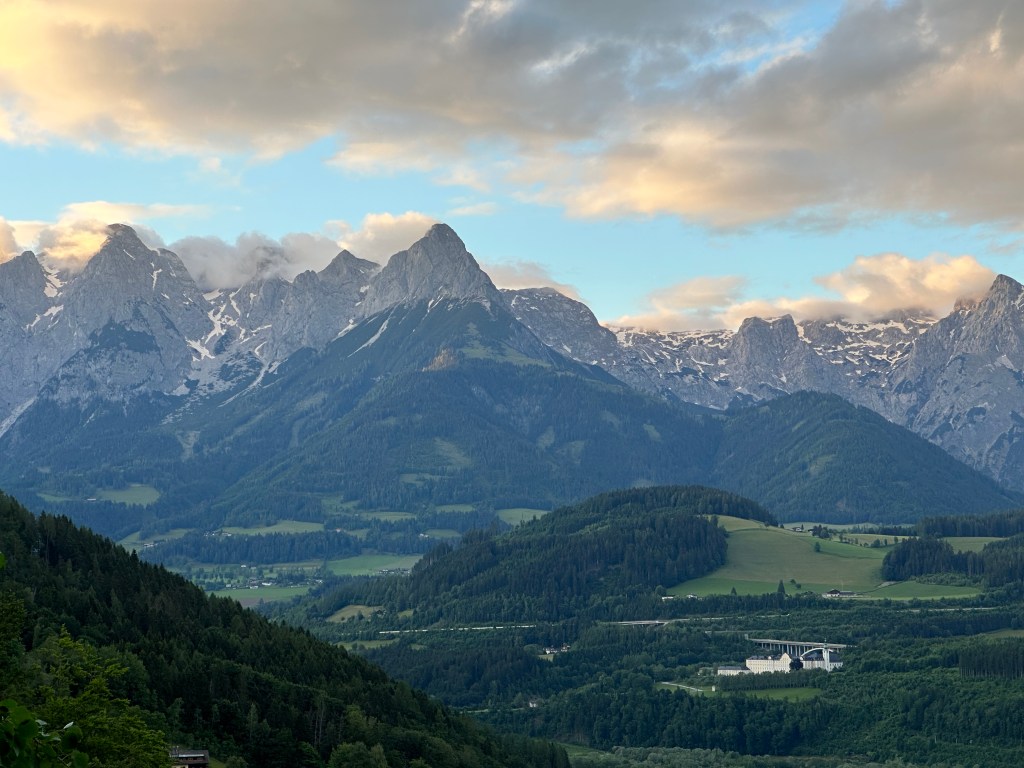
The horses stand placidly next to the tree line, watching as their riders find a spot to sit on the grassy ridge overlooking the broad sweep of the valley below. The sky has caught fire as bloody crimson suffuses the dawn’s muted gloom.
“We’ll give it fifteen minutes,” the old man mutters.
“Sure,” the younger woman says. She lays her cloak across the wet grass, and they both take a seat just before she begins peeling off her gloves. There’s another moment of silence between them both. She isn’t sure what to say. Before a couple of hours ago, there was purpose. There was nothing but purpose – a sole and murderous cause to which she had dedicated hours of training, days of study, weeks and months of conditioning.
She had forged herself into a weapon for a single throat, and now that it had been opened, she found herself staring into something huge and frightening. What would tomorrow morning look like? The one after that? What would she do with herself now?
She looks over at her companion. He’s older now – must have been middle aged when he found her in the fire, and the ten years they spent planning the assassination had done the work of decades more. She could see crows-feet along the edges of his eyes, hear him panting after even the short walk from the horses to the ridge. Still, the tension’s gone. His shoulders have dropped, and his jaw’s relaxed, for once.
“I wonder if the chancellor will be any better?” she says, leaning back on her hands. “He seemed sympathetic to the cause enough, I suppose, but that could simply be back-dealing to get his arse on the throne.”
“Oh it was certainly back-dealing to get his arse on the throne,” the old man chuckles. She flinches as she hears a wheeze on the edge of the sound. “But the tyrant – all his cruelty came from fear. Fear that he would be replaced. Fear that he’d lose control – control that he wanted for control’s sake.”
“The chancellor doesn’t want control for control’s sake?” she ventures.
“It’s hard to know what the chancellor wants, but when I was a soldier, the man did his best to curb the king’s worst impulses,” the old man says. “He failed, of course, but he tried. So – I imagine it’ll be a little better, at least. It’ll be something. It’ll be a change, even if it’s only the face on the coins.”
“Not that we’ll ever know,” she mutters.
“Not that we’ll ever know,” he confirms.
—
She had a natural knack for sneaking – all she needed was a polished knack for putting a knife where it shouldn’t be, and years of soldiering had taught him plenty of that, at least. She was a prodigal student: it took her little time to grasp a concept, and she set about practicing each and every maneuver, each martial principle, each exercise that he taught her with gusto. Within months, he’d have favored her chances against two or three men. Within a year, he figured she could present a serious threat to an entire squad, if she had a few minutes to prepare and sufficient shadow.
Planning the assassination itself took more time, if only because the tyrant himself was paranoid and presented little opportunity to get at his bared throat. Moreover, seeds had to be sewn, or the proverbial garden would just be overgrown again shortly after weeding it. The soldier was careful, of course, utilizing his understanding of the chain of command to make contact with sympathizers throughout the ranks. Men and women like him, who had seen too much murder and too little justice to be good soldiers any longer – and nobles like the chancellor, who understood well enough that the foundations of an empire began to slip if you muddied the soil with blood.
It took them the better part of a decade to put all the pieces on the board, and less than an hour for a guard to conveniently leave a gate unlocked at the right time, another to abandon his post a moment later for some imagined distraction, and for a young woman, cloaked in black, to open the king’s throat and escape through the window into a conveniently placed haycart just beneath.
There were considerations, of course. The king’s allies would want answers, and blood, and neither the old solider nor the young assassin were dumb enough to believe their tongues could stay still, sufficiently provoked. They would have to leave the valley, over the mountains, and disappear into another country across the sea – to be sure the chancellor could never be connected to the plot.
It was worth it, they told each other.
—
“Look,” she says. “The sun’s coming up.”
He glances away from her and back to the haloed mountains, where slow gold begins to crest the jagged horizon. It spills and rolls and pours into the valley below the water spills into a basin. It’s the last time either of them will ever see the sight.
They turn to look toward the valley’s northern edge, where the castle sits. They hear the trumpet blare – the birth cry of a new world, the signal that they’ve found the old one dead in its bed, its eyes opened, its mouth slackened in a surprised, misshapen “O.”
“We’ve done it,” the old man says. “We’ve seen it through. It’s theirs now. Think of what we’ve given them – a brand new world.”
She nods solemnly, and despite themselves, they watch the sun a little longer, and see the flurry of activity down the valley as people begin to wake up.
“Time to go?” the young woman says, after a while.
“Time to go,” the old man says.
They each climb to their feet, though the old man takes a little longer than he used to. They turn and head back to their horses, each climbing quietly into their saddles. Together, they maneuver back into the thick of the forest, heading west. With any luck, they’ll be at the summit by evening, and down by the docks on the other side by dawn the next day.

 The Chez Dispenser
Leave a comment